This page is a landing-place for running-related stories, race reports, and poems inspired by running. I dunno how often it’ll be updated, or if anyone will be interested in reading. But here we are, for the record.
World’s End Ultramarathon, 2026
Toeing the line for the second time at this gorgeous, grit-testing course was a wary shot at redemption after last year’s epically muddy DNF. “Wary,” in that I more prudently signed up for the 50k distance, as opposed to 2025’s first attempt at a 100k. Spoiler alert: this year the mud was downright amicable, the weather all one could wish, and I completed the 50k with nearly two and a half hours left on the cutoff clock.
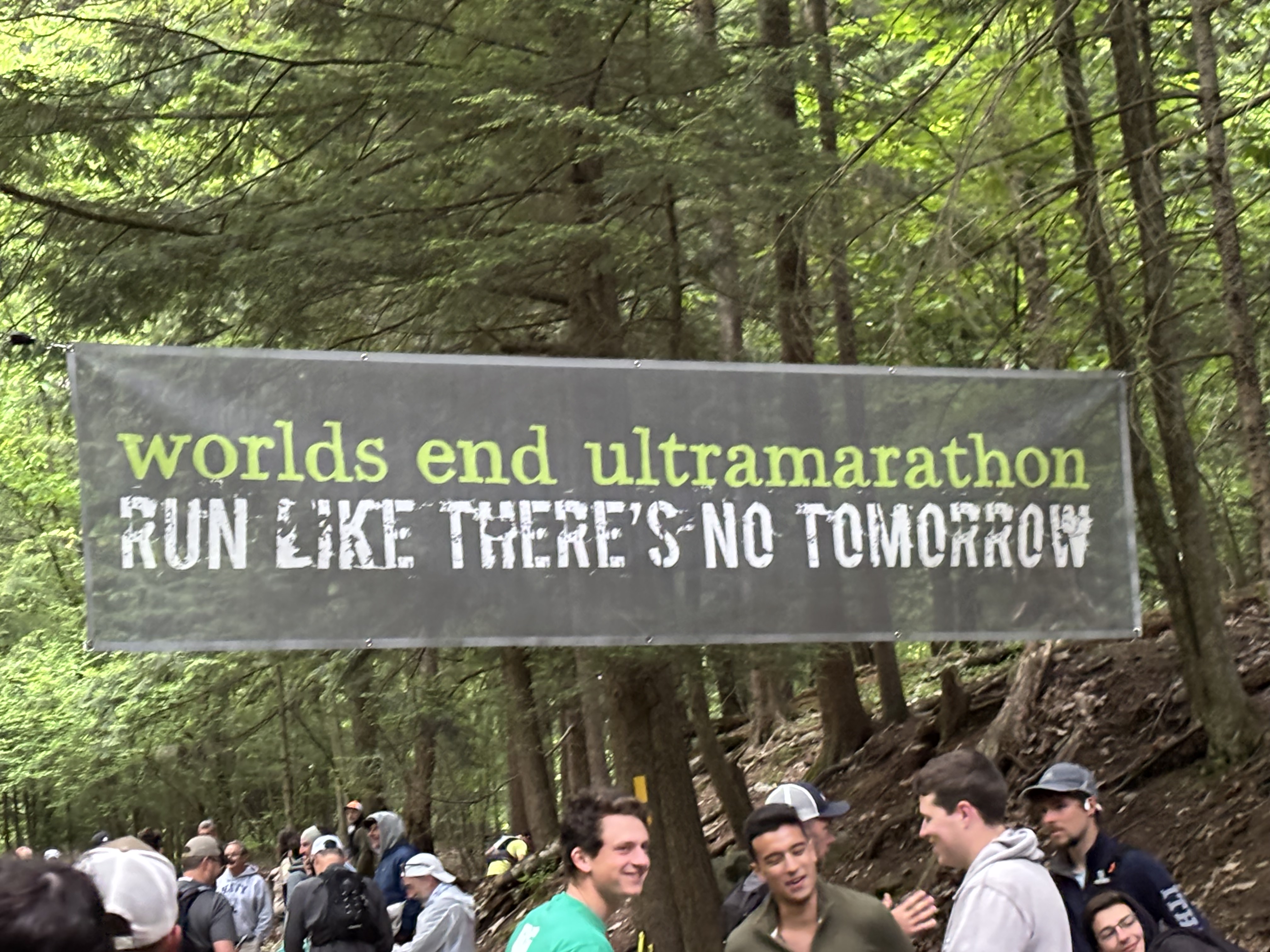
A little backstory: I don’t have a lot of experience with ultras. Prior to World’s End last year, I had completed exactly three 50ks, none of them on any more than flat, converted rail trail or paved path. What possessed me to attempt a rocky, single-track-heavy technical trail with more than 10,000 feet of climbing as a first time doubling that distance, I can’t tell you. (I think part of it was that it fell on my birthday, and pushing myself through sixty-plus miles of brutal, unfamiliar terrain just seemed somehow like the right way to celebrate.) I can say with complete honesty that I was not prepared for the wild difference in effort that the terrain called for, despite having done a few serious climbs out in the Pacific Northwest in the weeks leading to the race. But I was most undone by the mud. As a fellow runner this year put it, “Mother Nature shortchanged you.” It felt like the course consisted only of climbing and mud. And sometimes climbing through mud. Standing mud. Running mud. Mud that sucked at your shoes. Mud that kept you from seeing where you were putting your feet. My mental state on the course ran from frustrated to nearly panicked to despairing. By the time I made it to Aid Station 4, back at World’s End State Park, the first point at which runners could meet with their crews (in my case, my much patient and by that time somewhat worried husband), I was done. I surrendered my bib.
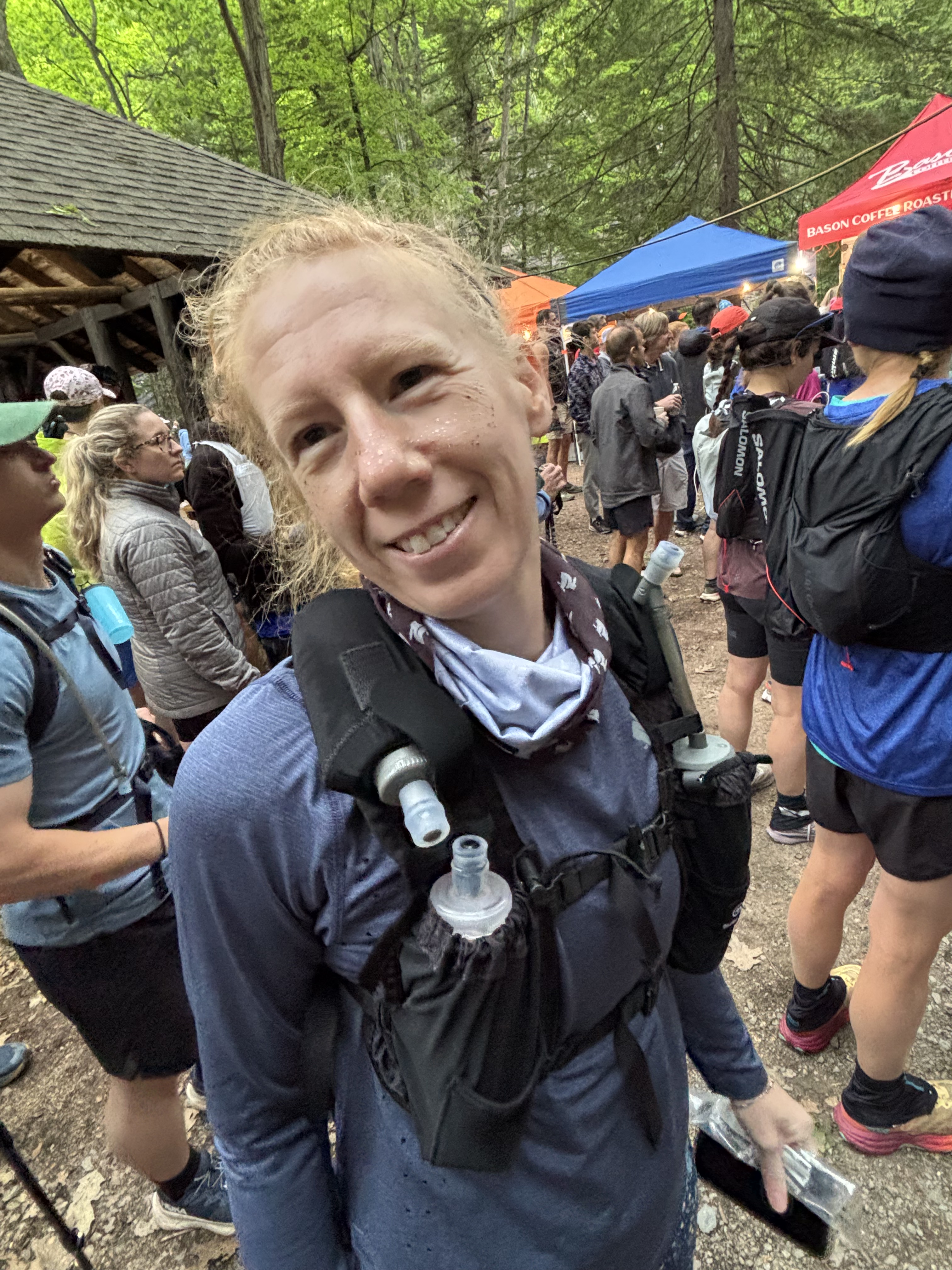
With not really any pleasant memories of last year’s efforts, why in the world would I decide to come back? (A question duly asked by multiple well-intentioned relatives.) Again, I’m not sure. Some part of it was unfinished business, sure. I think a small part, too was how impressed I had been with the race organization, volunteers, and staff last year—the care shown at each aid station, the clear instructions for crew and drop bags—up to and including the extreme pleasant surprise at receiving my drop bag, postage paid, a month out from the race, when I had completely abandoned it/written it off in my despondency after the DNF.
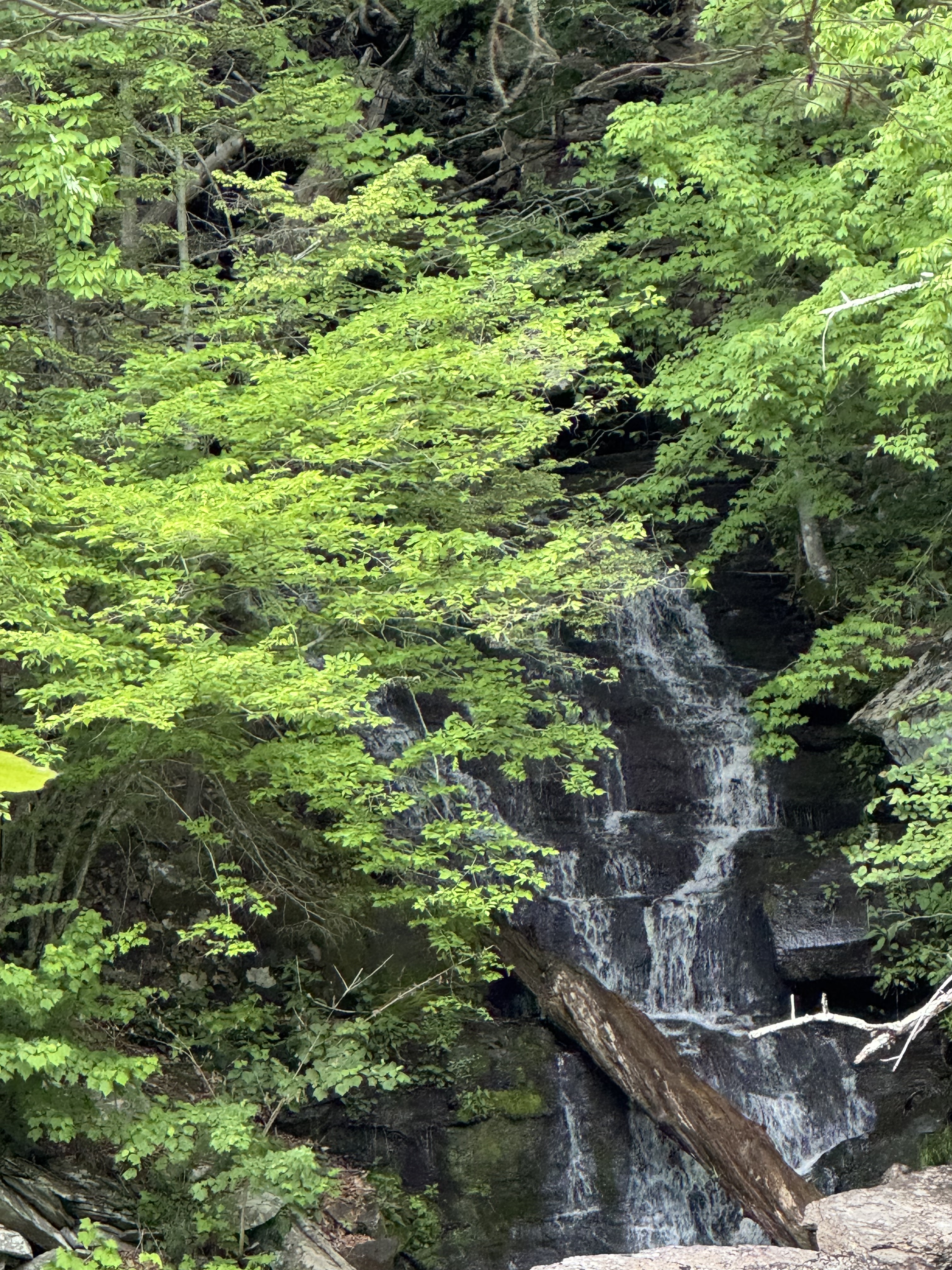
I wasn’t done with these mountains, with this place where they close ranks, pull you in, and cut you off from the wider world. I wanted to see the waterfalls again. Finish the poem about Loyalsock Creek. And, knowing a bit more about the terrain I was in for, see if I could leave with a different result.
Accordingly, my training this go round was quite different than last year. Though far from what it should have been (in total between early spring battles over schedule and energy levels and catching some kind of hacking cough thing about two and a half weeks out), I did a solid 5-6 weeks heavy on trail runs and hill repeats. I’ve described it to friends as the least sexy training plan possible, focusing on many slow, slow miles, lots of time-on-feet, end-of-business-day walk/jogs, and more repeats up the 11%-ish grade hill at Tredegar than any reasonable individual would consider in a given year (IYKYK).
Did it work? Yes and no. Certainly the hours out on the Buttermilk and Forest Hill Park trails helped re-acquaint me with the more technical single-track terrain… and the likely paces I’d be pulling. But as many times as I ran up that d*mned hill, it wasn’t enough for the seeming endless series of inclines at World’s End. Felt like past the second aid station at 11.4, I was stopping every 50 feet or so on the long climbs to let my heartbeat settle. And if it hadn’t been for fellow runner Andrew falsely telling me this was the last serious climb, I may have lost the will to keep climbing and again despaired. (In truth, it was never the last serious climb. Thank you, Andrew.)
Indeed, I discovered having company on the trail made a huge difference in the race experience. Not that I ran with someone per se, as there were long chunks of time when I was completely by myself, but there were also fair-sized chunks when I was keeping pace either with Andrew or others, and very few were the times when I wasn’t aware of runners both ahead of and behind me. Mentally, this was huge. Last year getting sucked into the mud left me close to the back of the pack and quite alone for much of the race. Something I learned about myself: I am paranoid about getting lost, and panic easy when I don’t automatically see an orange flag ahead indicating the path forward. So much so that I missed a marker twice last year and had to turn around. This year: not once.
Coming in to AS4, World’s End, was also a 180-degree difference in vibe this go-round. Last year, close to the cutoff and entirely done psychologically, I was already finished before I even handed the aid station captain my bib. This year, smiling, I found my drop bag, refilled my Tailwind, downed a soup cup of Coke, grabbed some Swedish fish and goldfish crackers for the road, kissed my husband goodbye and headed on up the hill for the next climb and all-new territory.
Fueling strategy was another aspect that differed this year. I did a bit more math headed into the thing and had a minimum number of calories I wanted to hit before reaching each aid station. A chronic underfuel-er, I know this is how I defeat myself a lot, both in training and in races. And I knew what I had packed/planned was still probably not going to be enough given the number of hours I’d be out there. I also tend to fuel less as time goes by—I have a hard time taking in anything in the late stages of the race, when I need them most.
By AS4, I had finished my first Tailwind (Dwaultermelon—the only flavor I can take in over long periods of time and not want to gag), and a package of Noogs. I also had watermelon, Gatorade, Coke, and a few PB pretzels at the earlier aid stations. I fell off in the back half, taking in only a second Tailwind, a few Goldfish crackers and Swedish fish, and more watermelon and Coke. I must have looked depleted by AS6 (Coal Mine), the last stop at mile 24.8, where the volunteers not only topped off my Gatorade but also gave me about a half a pound of grapes to take with me for the rest of the trip. (And I did—I munched on those grapes all the way to mile 30.) I didn’t touch any of the salty or sweet snacks I had packed in my vest for the race—Goldfish, pretzels, gummy bears, Cheetohs. I also came back with three pretty much untouched packages of Noogs and one of Clif Bloks which I had planned to consume. All told, about 1400-1500kcal that I had packed to take in during the race… and of which I consumed about 560kcal, then supplemented by what I grabbed at aid stations (mostly fruit and Coke/Gatorade).
I didn’t have any great aspirations or time goals for this race, as it was more about simply seeing if I could do the thing. But, as my friend and first running advisor Dorinda would always say, it’s best to have tiered goals. I used UltraPacer to make some general predictions about pacing and used a “standard” 10-hr model (given a 12-hr cutoff to finish) to estimate my time to arrive and depart aid stations; my “platinum” tier goal was to finish in under 10 hours. I stayed about 20 minutes ahead of each predicted aid station arrival, finishing in nine hours and thirty-six minutes. Definitely slower at the end, with my quads trashed and where running over even the flats seemed too much to ask. I stopped only once to take pictures—the waterfalls near Canyon Vista—and didn’t linger more than a couple minutes at each aid station. The weather was all just about perfect; I wore lightweight leggings, and two light tops, shedding a layer at AS5. I kept a windbreaker tucked in my vest but never needed it. I didn’t even wince at stepping into what mud there was—it felt only reasonable, and slipped into it ankle deep only a time or three. It somehow made a huge difference starting in daylight (the 100k starts at 5am, the 50k at a much more civilized 7am)… and knowing I was going to be finishing in daylight as well. I only felt the distant danger of wildlife once, when I came across fresh scat from some concerningly large animal (Bear? I am not an expert in these things.) at about mile 26. It hurried me along for a bit. I didn’t feel as prepared as I could have been for the race, but I at least did have a better idea of what I was in for. Will I do it again next year? I don’t know. But I still think it’s not a bad way to spend a birthday.
–Joanna, May 31 2026
PS–Better than I could have put it myself. Here’s the full course description from the website. I dare you to read it and not want to try.
Before sunrise, the forest at Worlds End State Park feels like a secret place. Shadows cling to the rocky slopes and mist drifts above the creek, blurring the lines of the world. You stand at the starting line, feeling the hush of dawn settle around you, the air cool and heavy with anticipation. The trail disappears into deep green woods, and you know that once you step forward, you are leaving ordinary ground behind.

Starting from the beautiful S-curve of the Loyalsock Creek in Worlds End State Park, the first miles are an invitation to what’s to come with winding, rocky singletrack framed by moss-covered boulders and arching hemlocks. They guide you gently at first, letting you settle into your stride. But soon, the forest changes its tone. Soon the trail climbs, rising sharply over rocky terrain. Roots twist like hidden steps across the path, forcing you to choose each foot placement with precision. Rocks appear where dirt once was. Roots stretch like fingers around every step. Switchbacks snake upward, granting glimpses through the trees of what you have conquered, what you have earned. The elevation demands respect. The terrain demands attention. And the course gives nothing for free.

However, once the trail reaches the edge of the state park proper, the forest opens up to a winding, serpentine meander along the plateau in the Loyalsock State Forest. You’ll experience fast level singletrack broken intermittently with swamp like conditions, narrow and dense passages through hemlock groves, and extremely technical cuts along water features.

Then comes the descent, technical and unforgiving. You pick your way through loose rock and angled slabs, through shaded hollows where streams cross the trail. The sound of rushing water rises again, guiding you like an old companion. Waterfalls appear from nowhere, spraying cool mist into the air as you navigate narrow ledges and slick stones. Here, you are never allowed to sleepwalk through the miles; the course demands focus, awareness, respect.

Once back to Worlds End State Park for the first time, you need to resupply and prepare yourself for everything you already experienced but pumped up by a factor of two. Brutal climbs lie ahead as you work your way out of the state park but your reward is more waterfalls and bigger views – culminating with the epic Canyon Vista.

Leaving Canyon Vista, the trail shifts in tone and mood, moving from airy heights to deep forest corridors. Ferns brush your legs, leaves whisper overhead, and the quiet becomes a kind of music. Sometimes the trail opens to views that feel endless. Sometimes it closes around you, like you’re running through a emerald tunnel cut straight from the heart of the wild. Hours slip by without announcement, and every ridge, every creek crossing, every unexpected climb adds to the story you’re writing with your feet.

The farther you go, the more the course becomes a conversation between your body and the land. The rocks test your balance. The climbs test your lungs. The descents test your courage. And the forest never stops reminding you that beauty and difficulty can be woven from the same thread.

By the time you loop back toward Worlds End, you have traveled through places that feel untouched by time. Your legs are tired, your mind sharpened by miles, and your heart strangely light. The sounds of the Loyalsock Creek grow familiar again, the trail literally falls off the edge of the mountain straight down to the state park, and the forest opens toward the finish. The cheers you hear are not just congratulations – they are recognition of the journey you’ve taken, the challenge you’ve met, the strength you found deep in the Pennsylvania wilds.

You cross the line having not simply run a race, but having experienced the raw soul of Worlds End: a place where the terrain humbles you, the beauty stuns you, and the trail makes you earn every mile.


Well done, my friend. I am even a little tempted to sign up for a trail race, not an ultra, mind you, but some bling to hang with my virtual Boston unicorn. Am happy to be a PWRs. You are amazing and so bright with bling!